
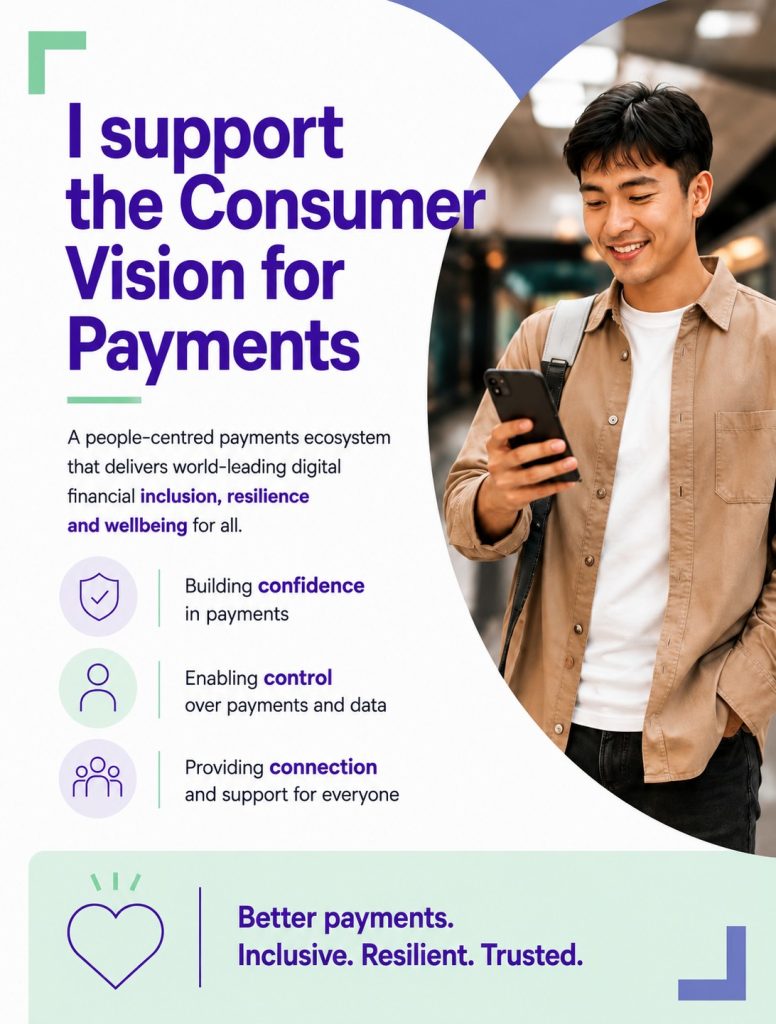
The publication of A Consumer Vision for Payments is a welcome and necessary intervention. It captures what many across the sector have been observing for years – that the UK’s payments ecosystem is strong, but not universally functional, and the people who struggle most with today’s payments are often those with the least margin for error.
The report’s framing around confidence, control and connection is particularly important. These principles reflect real consumer experience, not abstract policy ambition. As the document notes, “payments have become ‘high‑stakes’, anxiety‑inducing tasks for millions of people,” and this is a challenge the industry must now treat as structural rather than incidental.
Confidence: reliability and safety must be foundational
The Vision highlights widespread concerns about fraud, outages and the fragility of digital‑only journeys. With “two‑thirds of UK adults having experienced some form of payments disruption,” confidence cannot be assumed. The call for more resilient, secure and protected payments is not simply about infrastructure – it’s about trust.
For innovators, this means designing services that work predictably for people whose financial lives are anything but predictable. It also means recognising that cash continues to play a vital role in resilience, budgeting and backup when digital systems fail.
Control: flexibility and visibility are no longer optional
The report is clear: “People need more flexible ways to pay that give them greater control to stop or change a payment.” This is one of the most important messages for billers and payment providers. Traditional recurring payment models work well for many, but not for everyone, particularly those living with income volatility, irregular work patterns or complex household finances.
The Vision’s emphasis on real‑time visibility, predictable payment flows and built‑in budgeting support aligns with what we see across utilities, telecoms and other recurring‑bill sectors. Consumers want clarity. Billers want certainty. The industry needs models that can deliver both.
JOYNTPAY was developed in response to exactly these pressures – not as a replacement for existing rails, but as part of a broader shift toward flexible, consumer‑aligned payment journeys.
Connection: support networks matter more than ever
One of the strongest sections of the report concerns the role of financial helpers. With 11 million people helping someone else manage money, the Vision rightly calls for safe, structured third‑party access. The current reliance on informal workarounds – “87% of people with learning disabilities report using risky workarounds” – is neither safe nor sustainable.
This is an area where industry collaboration is essential. Payment journeys must be designed with shared access, permissions, auditability and accountability built in. The Vision’s call for smart‑data‑enabled “Tell Us Once” approaches is equally important, ensuring people can disclose needs without repeatedly navigating complex processes.
A moment for practical delivery
The Consumer Vision sets a clear direction. What matters now is execution. As the report notes, “leadership and co‑ordination from government and regulators” will be essential, but industry must also step forward with solutions that can be deployed today.
JOYNTPAY was created to contribute to that practical delivery, offering billers and consumers a flexible, predictable payment option aligned with the Vision’s principles. But the broader point is this: the UK needs a payments ecosystem designed around real lives, not idealised ones.
The Consumer Vision provides the blueprint. Now the sector must build against it.


